
The Georgian Bay Biosphere is holding a Turtle Open House at their Williams Street office on August 20.
Tianna Burke, Lands and Wildlife Programs Manager says the event, which kicks off at 10 AM, is an opportunity to come out and learn about native turtles in Ontario, the kind of threats that they face and what you can do to help them.
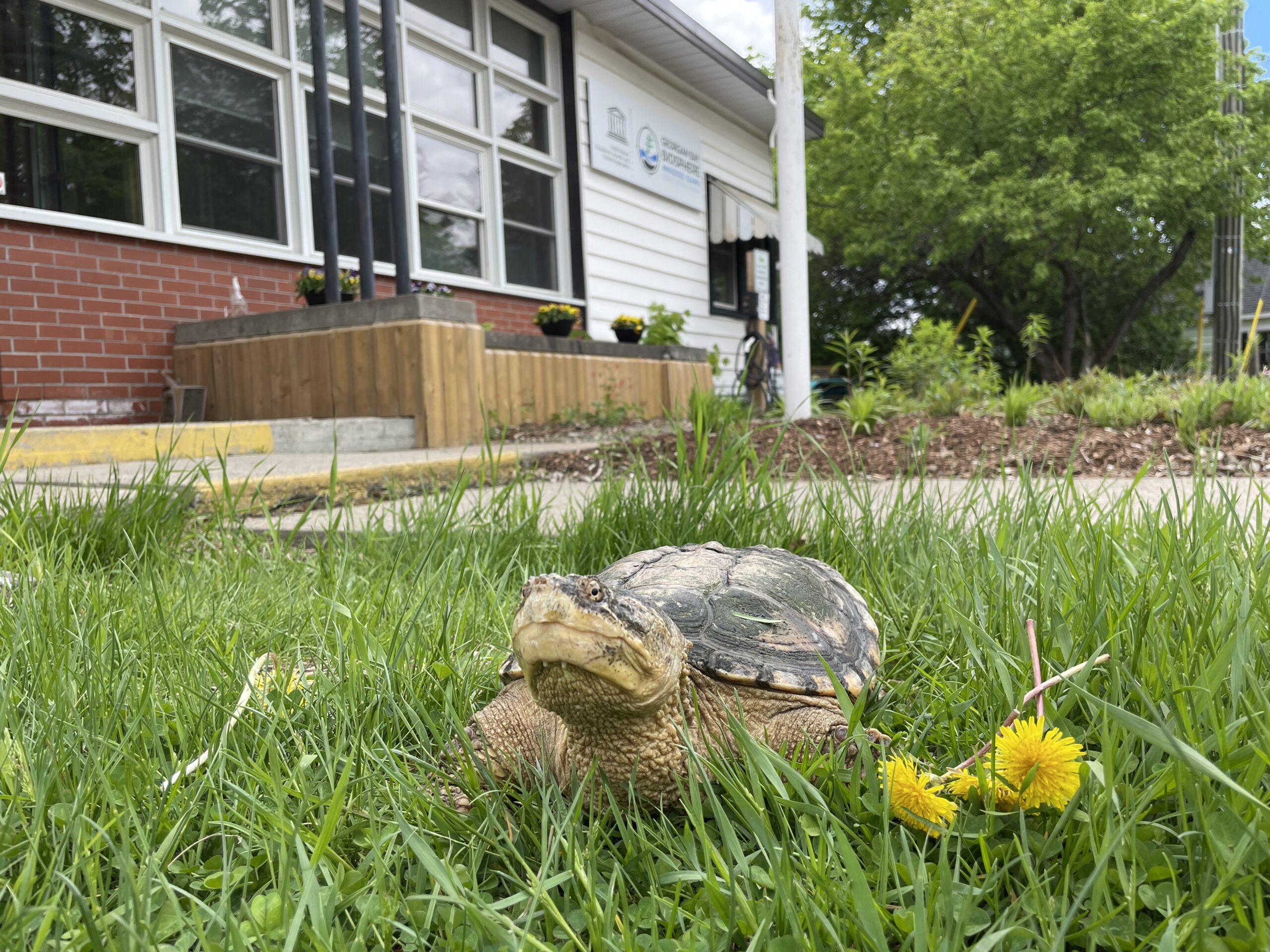
“There are opportunities to meet Miki our Turtle Reptile ambassador from this summer. Our staff are going to use Miki to help people learn how to hold snapping turtles and move turtles across roads. We’re hoping to have some turtle-related kids activities possibly and there’s chances to meet some of our little turtle hatchings that were part of our incubation program,” Burke says.
She says the open house is an informal style drop in event, basically just discussing any and all turtle questions.
“We’ll be trying to ease some fears and reduce some myths about snapping turtles. Like they’re not mean, but they’re just protective of themselves and quite introverted and just want to be left alone. We’ll be talking about how they face so many threats in the wild and they’re such long lived animals, but it takes them a long time to kind of reproduce and keep their population stable,” she says.
Burke says that’s one of the many reasons why it’s so important to really help protect and save them when we can.
As for the do’s and don’ts when it comes to picking up a snapping turtle, she says the worst way to pick up a snapping turtle, at least for the animal itself, is by its tail. Burke says the tail is part of the turtle’s spine, and so picking up a turtle by its tail could leave it paralyzed.
“The best way to pick up a snapping turtle is basically holding it at the back of the shell. They have little pockets at their back legs that you can lift and use your wrist strength to hold them. The way that I prefer because I don’t have very strong arms is lifting them like a pizza box by putting your hand underneath of its shell and that as leverage to hold them. If it’s a really big turtle you can also place them on like a car mat or some other kind of surface that you then drag off the road,” she says.
Burke says as for hatchlings, they start coming out in the wild towards the end of August, September, sometimes until October. She says the most important thing is to understand that hatchlings are born alone and do not have any sort of parental guidance with them.
“They know what they’re doing, they know where they’re going. And when you find them, the best thing that you can do is bring them in the direction they’re going in. If there’s a water source that’s you can see nearby, you can place them in that water source. Preferably in a place that also has vegetation,” she says.
Burke says everyone with the program is looking forward to having people come out for the open house, take a look at the turtles and learn more about the Biosphere’s turtle conservation programs.