
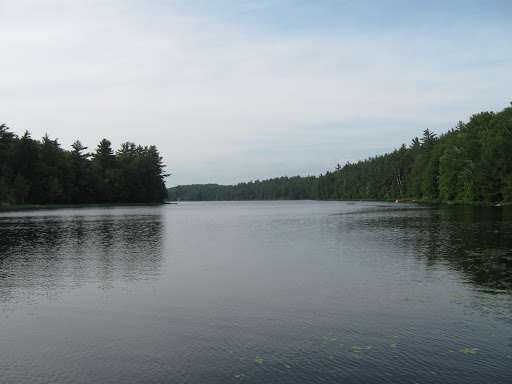

The North Bay Parry Sound District Health Unit is advising the public of a harmful blue-green algae found in Tucker Lake.
The Health Unit notes the species of the algae capable of producing toxins were confirmed by the laboratory of the Ministry of the Environment, Conservation and Parks.
The toxins can irritate the skin and, if swallowed, cause diarrhea and vomiting.
Residents of Tucker Lake in Parry Sound, Seguin Township may be affected depending on their closeness to the algae bloom, the size of the lake, wind direction, water flow, and other environmental conditions that cannot be predicted or controlled.
Due to the many factors involved, government authorities are unable to determine where and when there are no toxins. Users are advised to exercise their judgment before using the water.
If you live near where a bloom was detected or where a bloom is visible, follow these safety measures:
- Do not use the water. This includes drinking, cooking, bathing, and brushing teeth. Note: Using a private water system or boiling the water will not destroy the toxins.
- Do not swim and avoid water sports when a bloom is present.
- If skin contact does occur, wash with soap and water then rinse thoroughly with clean water to remove algae.
- Limit the amount of fish flesh you eat. Some toxins can build up in fish and shellfish. Do not eat the liver, kidneys and other organs. Be careful not to cut the organs when filleting.
- The Health Unit has not closed the beaches, but rather advises individuals that they need to take caution in the area.
Here are some other quick facts about the algae:
- Cyanobacteria – also called harmful algae, blue-green algae or ‘pond scum’ – are not really algae, but tiny bacteria.
- Although usually hard to see, during hot weather they can grow rapidly to form a large mass, called a bloom. Blooms continually change and are difficult to predict. Wind, temperature or sunlight could change where the bloom is located in the water.
- Dense harmful algae blooms may make the water look bluish-green, or like green pea soup or turquoise paint. Very dense blooms may form solid-looking clumps.
- Fresh blooms often smell like newly mown grass, while older blooms may smell like rotting garbage.
- Even when a bloom has disappeared, toxins can persist in water bodies for a period of time.
- Long-term toxin exposure at high levels may cause liver and nervous system damage.
For further details on the location of the algae bloom, and sampling process, contact the Ministry of the Environment, Conservation and Parks – Spills Action Centre – 1-800-268-6060.